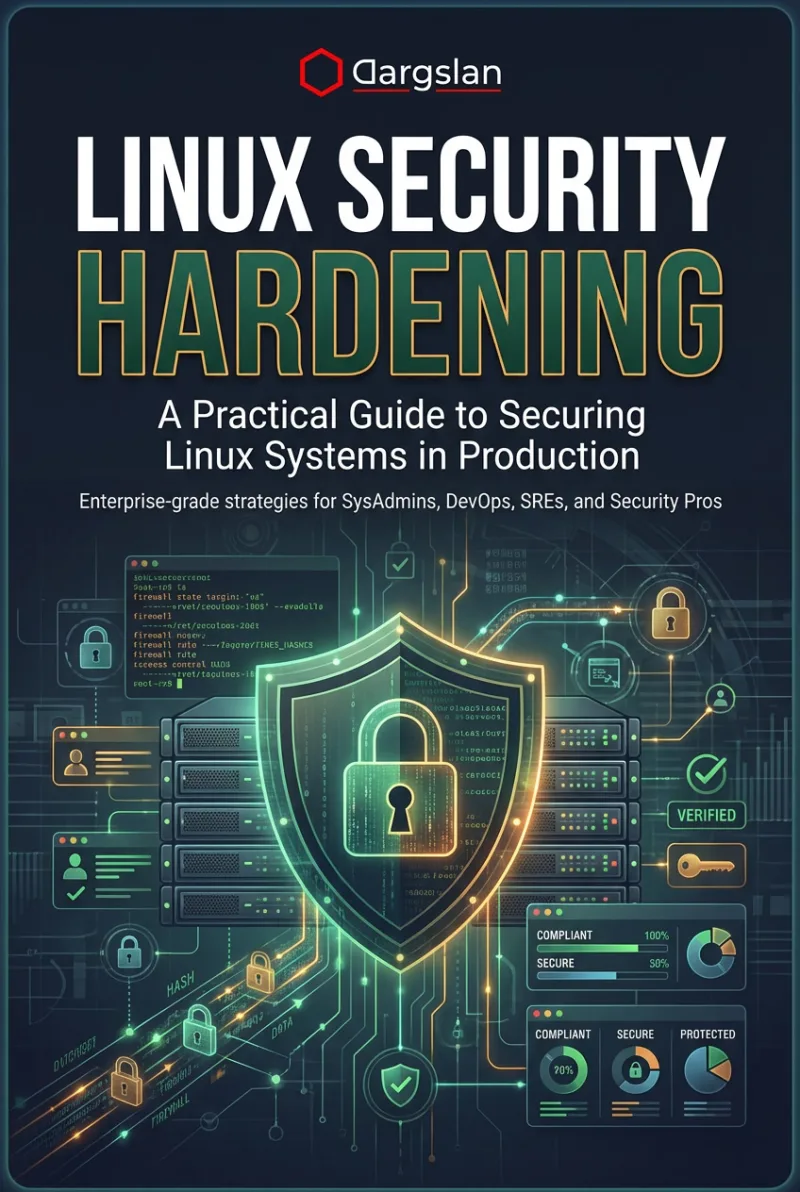
Linux Security Hardening
A Practical Guide to Securing Linux Systems in Production
What's Included:
Key Highlights
- Production-focused Linux security hardening
- Kernel, network, and access control protection
- SELinux and AppArmor explained practically
- Logging, auditing, and intrusion detection
- Automation and incident response included
Overview
Harden Linux systems for production use. Learn kernel security, access control, SELinux, AppArmor, firewalling, logging, intrusion detection, automation, and incident response with practical examples.
The Problem
Many Linux systems are compromised due to weak defaults, misconfigurations, exposed services, poor access control, and lack of monitoring. Without structured hardening, production Linux systems remain vulnerable.
The Solution
This book provides a production-ready Linux security hardening framework, covering kernel security, access control, network protection, mandatory access control, automation, and incident response.
About This Book
Production-Ready Linux Security Hardening
Linux Security Hardening is a practical, production-focused guide for securing Linux systems against real-world threats. It transforms default Linux installations into hardened, security-aware environments suitable for enterprise and cloud deployments.
Linux systems power critical infrastructure worldwide. While Linux provides strong security foundations, improper configuration and weak operational practices remain the most common causes of breaches.
Why This Book Matters
Security hardening is not a single configuration step—it is a mindset and a process. This book bridges the gap between theoretical security knowledge and practical Linux protection by focusing on real attack surfaces, misconfigurations, and defense-in-depth strategies.
Every recommendation in this guide is tested in production Linux environments and aligned with modern security best practices.
What You Will Master
- Developing a Linux security-first mindset
- Identifying Linux-specific attack surfaces
- Secure Linux installation and baseline configuration
- Kernel and boot security hardening
- User, account, and privilege escalation protection
- Permissions, ownership, and ACL strategies
- Reducing network exposure and attack surface
- Firewall configuration using Linux-native tools
- Hardening network services and daemons
- Mandatory Access Control with SELinux and AppArmor
- Logging, auditing, and security visibility
- Intrusion detection and prevention techniques
- Patch management and update strategies
- Hardening automation and repeatable workflows
- Incident response fundamentals
- Backup and recovery security
- Role-based hardening for common Linux workloads
Built for Production Linux Environments
This book is designed for real-world Linux deployments—servers, cloud infrastructure, containers, and enterprise environments. The techniques apply across major Linux distributions and focus on stability, maintainability, and measurable risk reduction.
Actionable Appendices
Comprehensive appendices provide security checklists, misconfiguration examples, secure sysctl templates, incident response references, and role-based hardening guides.
Build Linux systems that are secure by design.
Miles Everhart
Who Is This Book For?
- Linux system administrators securing production systems
- DevOps and SRE engineers
- Security engineers working with Linux infrastructure
- IT professionals responsible for server hardening
- Engineers transitioning into DevSecOps roles
Who Is This Book NOT For?
- Absolute beginners with no Linux fundamentals
- Readers looking for basic Linux usage tutorials
- Users seeking compliance checklists without explanation
Table of Contents
- Linux Security Mindset
- Understanding Linux Attack Surfaces
- Secure Linux Installation
- Kernel and Boot Security
- User and Account Security
- Permissions, Ownership, and ACLs
- Privilege Escalation Prevention
- Network Exposure Reduction
- Firewall Configuration
- Securing Network Services
- SELinux Fundamentals
- AppArmor Essentials
- Logging and Audit Trails
- Intrusion Detection and Prevention
- Patch Management and Updates
- Hardening Automation
- Incident Response Basics
- Backup and Recovery Security
- Hardening Common Linux Roles
- Security Best Practices Checklist
Requirements
- Solid Linux command-line skills
- Basic system administration knowledge
- Access to a Linux server or VM