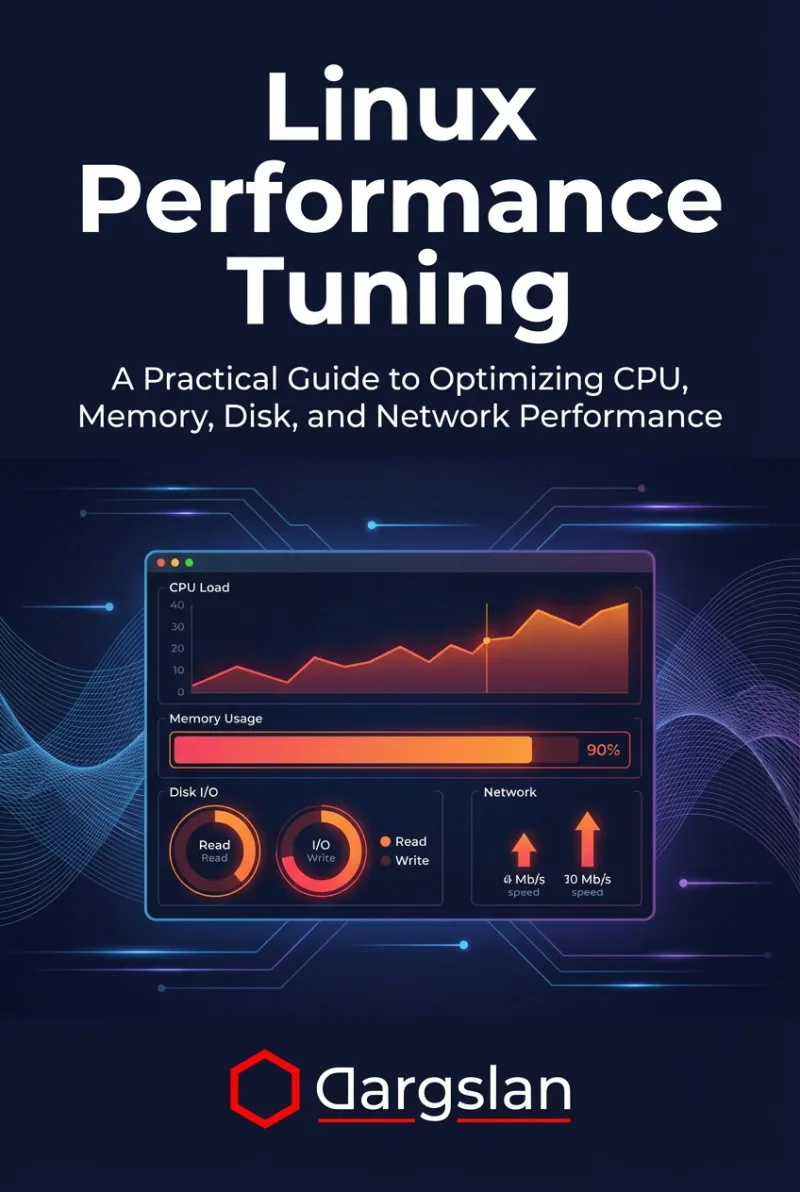
Linux Performance Tuning
A Practical Guide to Optimizing CPU, Memory, Disk, and Network Performance
What's Included:
Key Highlights
- Practical tuning methodology with safety principles
- Deep coverage of CPU, memory, disk I/O, and network performance
- Monitoring tools: top, iostat, sar, tcpdump and more
- Kernel tuning with sysctl explained clearly
- Benchmarking and automation strategies included
Overview
Optimize Linux performance with practical tools and proven tuning techniques. Learn to diagnose bottlenecks and improve CPU, memory, disk I/O, and network performance in real systems.
The Problem
Linux systems often slow down under real workloads, but many teams lack a clear tuning methodology. Without proper monitoring and diagnostics, performance issues become guesswork, leading to wasted resources and unstable fixes.
The Solution
This book teaches a practical, step-by-step approach to Linux performance tuning: measure first, diagnose bottlenecks, then apply proven tuning strategies for CPU, memory, disk I/O, and network performance.
About This Book
Optimize Linux Like a Professional
Linux Performance Tuning is a practical guide for diagnosing bottlenecks and optimizing Linux systems across the four core performance domains: CPU, memory, disk I/O, and network.
Linux runs the infrastructure behind modern applications—from cloud platforms to enterprise servers. When performance issues appear, the ability to monitor, diagnose, and tune Linux systems becomes an essential skill for system administrators, DevOps engineers, and developers.
Why Performance Tuning Matters
Linux delivers excellent performance out of the box, but real-world environments introduce complex workloads, competing resources, and changing traffic patterns. Solving performance problems requires methodology, safe tuning practices, and the right Linux-native tools.
This book bridges the gap between theory and real-world application with a structured, two-phase approach: first learning to measure and diagnose, then applying targeted tuning strategies.
What You Will Learn
- Linux performance architecture and tuning fundamentals
- Safe tuning methodology and risk management
- Monitoring CPU usage and eliminating CPU bottlenecks
- Analyzing memory pressure, swap behavior, and cache effects
- Monitoring disk I/O and optimizing storage performance
- Filesystem and mount option tuning for real workloads
- Monitoring network traffic and tuning network stack performance
- Tuning kernel parameters using sysctl
- Using essential Linux tools: top, iostat, sar, tcpdump and more
- Optimizing system services, web servers, and databases
- Benchmarking and load testing techniques
- Automating performance monitoring and reporting
Designed for Real Infrastructure
This book is built for real Linux environments—single servers, production clusters, and cloud-based systems. The techniques are practical, measurable, and focused on improving efficiency without breaking system stability.
Reference-Ready Appendices
The appendices include a sysctl tuning cheat sheet, filesystem mount options guide, sample benchmark scripts, interview questions, and a curated list of recommended tools.
Improve Performance with Confidence
By the end of this book, you will be able to identify performance bottlenecks quickly, apply safe tuning changes, and continuously monitor your Linux systems for optimal performance.
Happy tuning!
Miles Everhart
Who Is This Book For?
- Linux system administrators managing servers
- DevOps engineers optimizing infrastructure
- Developers running performance-critical applications
- Cloud engineers and SREs
- IT professionals preparing for Linux performance interviews
Who Is This Book NOT For?
- Absolute beginners with no Linux fundamentals
- Readers looking only for basic Linux command introductions
- Users wanting distribution-specific tuning only
Table of Contents
- Understanding Linux Performance Architecture
- Tuning Methodology and Safety
- Monitoring CPU Usage
- Tuning CPU Usage
- Monitoring Memory Usage
- Tuning Memory and Swap
- Monitoring Disk I/O
- Filesystem and Storage Optimization
- Monitoring Network Traffic
- Network Tuning Techniques
- Tuning System Services
- Web and Database Tuning
- Benchmarking and Load Testing Tools
- Automating Performance Monitoring
- Best Practices and Tuning Checklist
Requirements
- Basic Linux command-line skills
- Understanding of system administration fundamentals
- Access to a Linux system for practice