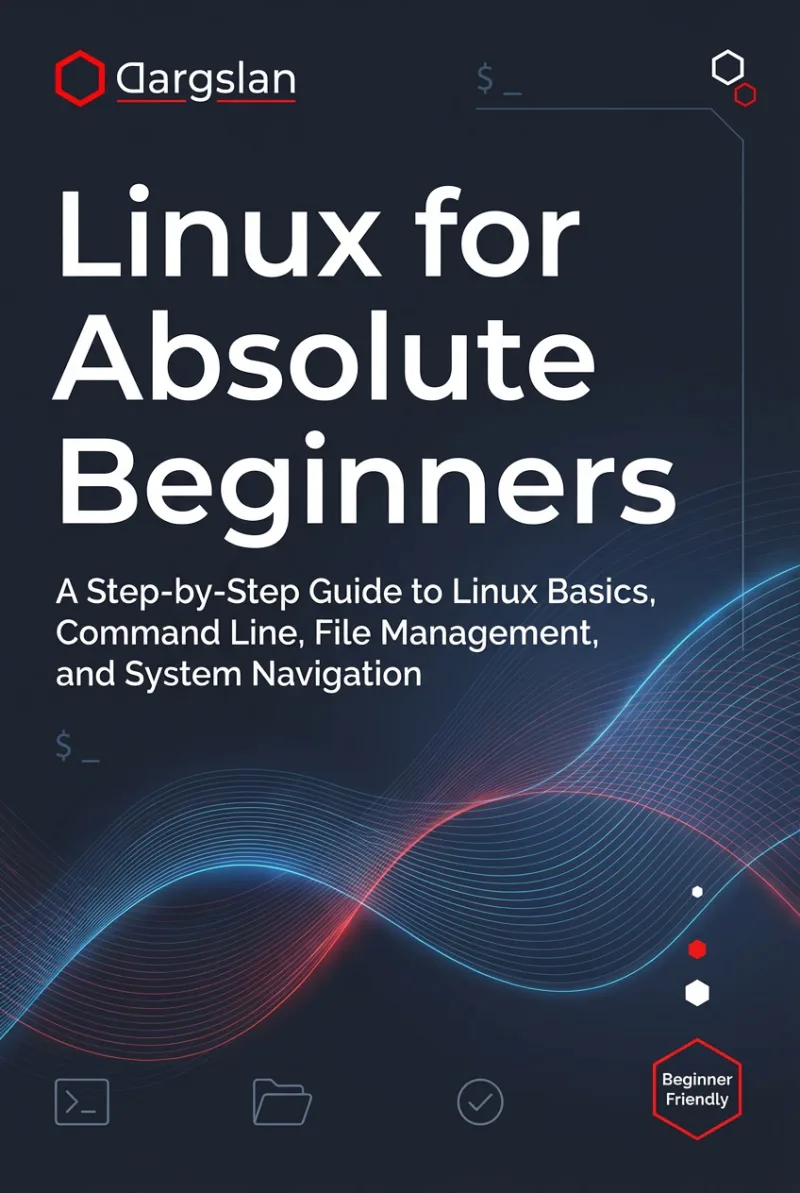

Linux for Absolute Beginners
A Step-by-Step Guide to Linux Basics, Command Line, File Management, and System Navigation
What's Included:
Key Highlights
- Beginner-friendly explanations
- No prior Linux knowledge required
- Command line and desktop usage covered
- Real-world examples and exercises
- Includes cheat sheets and reference material
Overview
Learn Linux from scratch with a beginner-friendly, step-by-step guide. Master the Linux command line, file system, permissions, and core system concepts with practical examples.
The Problem
Many beginners find Linux overwhelming due to unfamiliar commands, file systems, and terminology. Most resources assume prior knowledge, making it difficult for newcomers to get started confidently.
The Solution
This book provides a structured, beginner-first approach to Linux. Concepts are explained clearly and practically, helping readers understand Linux step by step without prior experience.
About This Book
Start Your Linux Journey with Confidence
Linux for Absolute Beginners is a practical, beginner-friendly introduction to the Linux operating system. This book is designed for readers with little or no prior experience who want to understand Linux from the ground up.
Linux powers servers, cloud platforms, embedded systems, smartphones, and even supercomputers. Learning Linux is no longer optional for anyone serious about technology—it is a foundational skill.
Why Learn Linux?
Linux is secure, flexible, open-source, and used worldwide by developers, system administrators, and IT professionals. From personal desktops to enterprise infrastructure, Linux is everywhere.
This book removes the intimidation factor and explains Linux concepts clearly, step by step, using real-world examples.
What You Will Learn
- What Linux is and how it works
- Choosing the right Linux distribution
- Installing Linux safely
- Navigating the Linux desktop
- Managing files and directories
- Using the Linux command line
- Essential Linux commands
- Users, groups, and permissions
- Linux file system structure
- Installing and removing software
- Managing services and processes
- Networking basics
- Basic troubleshooting and log analysis
Beginner-Friendly Learning Path
The book is structured to build confidence gradually. Each chapter introduces new concepts while reinforcing previous knowledge through practical exercises and examples.
Hands-On and Practical
You will not just read about Linux—you will actively use it. Commands, configurations, and system concepts are explained clearly so you understand what you are doing and why.
Additional Resources
The appendices include a Linux commands cheat sheet, keyboard shortcuts, recommended resources, and an overview of Linux certification pathways.
Who This Book Is For
This book is ideal for beginners, students, career switchers, and anyone curious about Linux and open-source technology.
Happy learning and welcome to the Linux community!
Dargslan
Who Is This Book For?
- Absolute beginners with no Linux experience
- Students learning operating systems
- Windows or macOS users switching to Linux
- IT beginners and career changers
- Anyone interested in open-source software
Who Is This Book NOT For?
- Advanced Linux administrators
- Readers looking for kernel-level development
- DevOps or cloud professionals seeking advanced automation
Table of Contents
- What is Linux?
- Choosing a Linux Distribution
- Installing Linux
- Understanding the Linux Desktop Environment
- Managing Files with the File Manager
- Getting Comfortable with the Terminal
- Essential Linux Commands
- Users, Groups, and Permissions
- Linux Directory Structure Explained
- Disk Usage and File System Management
- Installing and Removing Software
- Managing Services and Processes
- User and Group Management
- Networking Basics
- Basic Troubleshooting and Logs
Requirements
- Basic computer skills
- Access to a computer
- Willingness to learn and experiment