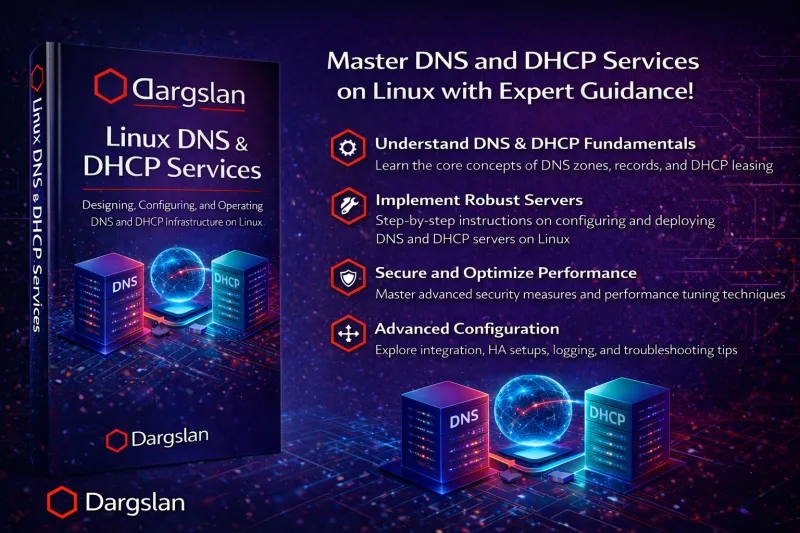
Linux DNS & DHCP Services
Designing, Configuring, and Operating DNS and DHCP Infrastructure on Linux
What's Included:
Key Highlights
- Linux-first DNS & DHCP design and operations
- BIND installation, zones, and record management
- DHCP configuration from basic to advanced
- Dynamic DNS updates and integrated workflows
- Security hardening and production best practices
- Monitoring, troubleshooting, backup, and change management
- Small office and enterprise architecture guidance
Overview
Design and run DNS & DHCP on Linux with BIND and DHCP server. Learn zones, records, dynamic DNS, security hardening, monitoring, troubleshooting, and scalable architectures.
The Problem
Unreliable DNS and DHCP cause slow networks, broken services, and endless troubleshooting. Many setups rely on guesswork, insecure defaults, and poor operational practices—especially when networks grow.
The Solution
This book provides a practical Linux-first roadmap to design, configure, secure, and operate DNS and DHCP using proven tools and best practices, from small office deployments to scalable enterprise architectures.
About This Book
Build Reliable DNS & DHCP Infrastructure on Linux
Linux DNS & DHCP Services is a practical, Linux-focused guide to designing, configuring, securing, and operating DNS and DHCP infrastructure using trusted Linux tools such as BIND and Linux-based DHCP services.
DNS and DHCP sit at the foundation of every network—quietly powering name resolution, device configuration, and reliable connectivity. When these services are misconfigured, networks become slow, unreliable, and difficult to troubleshoot. When they are designed correctly, your infrastructure becomes predictable, scalable, and secure.
What You’ll Learn
- How DNS and DHCP work and why they matter
- Network design principles for DNS & DHCP deployments
- Installing and configuring BIND on Linux
- Zones, records, and clean DNS organization
- DHCP server configuration and advanced options
- Dynamic DNS updates (DDNS) and DNS/DHCP integration
- Security hardening and best practices for production networks
- Monitoring, logging, troubleshooting, and operational workflows
- Backup, recovery, and change management
- Small office setups and enterprise-scale architectures
Linux-First, Real-World Approach
This book focuses specifically on Linux implementations and real operational scenarios. You will learn not only what to configure, but why it works and how to keep it maintainable over time.
Reference Materials Included
The appendices provide DNS record references, BIND and DHCP configuration examples, common errors and fixes, and a best-practices checklist you can apply immediately.
Operate DNS & DHCP with Confidence
By the end of this book, you will be able to design and run stable DNS and DHCP services on Linux, secure them properly, troubleshoot failures quickly, and scale them for growing environments.
Let’s build the network services that keep everything connected.
Bas van den Berg
Who Is This Book For?
- Linux system administrators running network services
- Network engineers working with Linux infrastructure
- DevOps / platform engineers managing internal networks
- IT teams building secure DNS & DHCP foundations
- Readers deploying BIND and DHCP in production
Who Is This Book NOT For?
- Absolute beginners with no Linux or networking basics
- Readers looking for a vendor-only DNS solution (no Linux focus)
- Advanced DNS researchers seeking highly academic protocol theory only
Table of Contents
- Why DNS and DHCP Matter
- Network Design for DNS and DHCP
- How DNS Works
- DNS Server Software on Linux
- Installing and Configuring BIND
- DNS Zones and Records
- DNS Security and Hardening
- How DHCP Works
- DHCP Server Software on Linux
- Installing and Configuring DHCP
- Advanced DHCP Configuration
- Dynamic DNS Updates
- DNS & DHCP in Mixed Environments
- Monitoring and Troubleshooting
- Security Best Practices
- Backup, Recovery, and Change Management
- Small Office DNS & DHCP
- Enterprise and Scalable Architectures
Requirements
- Basic Linux terminal familiarity
- Basic networking concepts (IP, subnet, gateway)
- A Linux VM/VPS or lab environment for testing